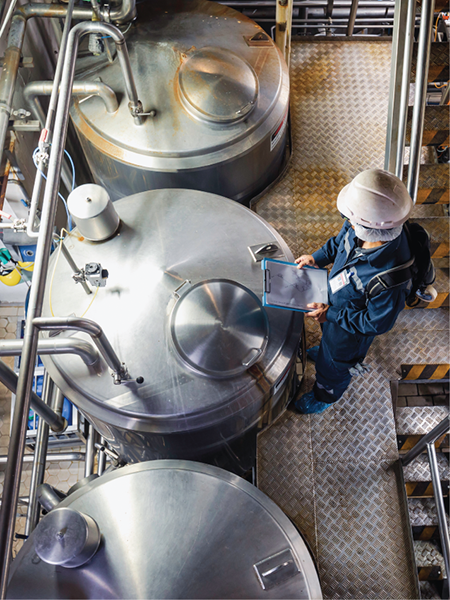
At the headquarters of a U.S. stainless steel equipment manufacturer, nearly two-thirds of the 650 employees work in a million-square-foot facility that operates using 3 shifts (days, nights, and weekends). Producing equipment for industries including food and beverage, industrial, chemicals and biopharmaceutical, their work involves welding, grinding, heavy material handling, over the road trucking, blasting, and painting–activities with inherent hazards that the company closely monitors.
But the real danger? Isolation.
Da der Betrieb rund um die Uhr läuft und die Aufsicht in manchen Schichten eingeschränkt ist, arbeiteten einige Mitarbeiter oft allein oder außerhalb der Sicht- und Hörweite anderer, was es schwierig machte, in Notfällen sofort Hilfe zu bekommen.
The company relied on radios with manual check-ins–but these could be disabled, leading to complacency and reducing visibility into worker safety. A fragmented alert system that required employees to activate radios while supervisors managed notifications across multiple platforms held potential to delay emergency response efforts. Safety data collection was manual and reactive, with no real-time insights or compliance tracking. A more integrated solution was required.