<img src="https://secure.leadforensics.com/77233.png" alt="" style="display:none;">

Lone worker safety and gas detection for transportation & logistics workers

DATENGESTÜTZTE SICHERHEIT.

Transportation, logistics and hauling are crucial components in maintaining the supply chain for other industries. Goods and materials need a timely and reliable delivery method which requires dedicated workers to ensure that happens.

The most common modes of industrial transportation pose a risk to worker safety, from lone worker hazards to potential exposures to gases. Here is a quick look at some of the gas hazards by mode of transportation:

1. Road Transportation - this includes cars, trucks, buses, and other vehicles. It's a convenient and flexible way to move goods over shorter distances. Common gas hazards are carbon monoxide (CO) and flammable liquids and gases such as gasoline, propane, and methane.

2. Rail Transportation -  moves heavy goods and materials over long distances. It's efficient and cost-effective, often used for bulk commodities such as coal and grain but also for the transportation of hazardous chemicals such as chlorine (Cl2), ammonia (NH3) and sulfur dioxide (SO2). Trains also frequently transport flammable materials like ethanol, crude oil and natural gas. Many of the types of cargo shipped by trains can be extremely hazardous in the event of a derailment or accident.

3. Air Transportation - moves high-value, time-sensitive goods over long distances. This method is fast but more expensive. Common gas exposures are carbon dioxide (CO2) and combustible gases such as jet fuel vapors. 

4. Water Transportation - this includes shipping via container ships, tankers and carriers and reefers. It's an efficient and cost-effective mode of transportation for bulk goods and materials over long distances. Flammable liquids and gases along with carbon monoxide (CO) can pose a risk to workers, as can other harmful gases in confined spaces on marine vessels such as cargo, fuel, sewage and ballast tanks.
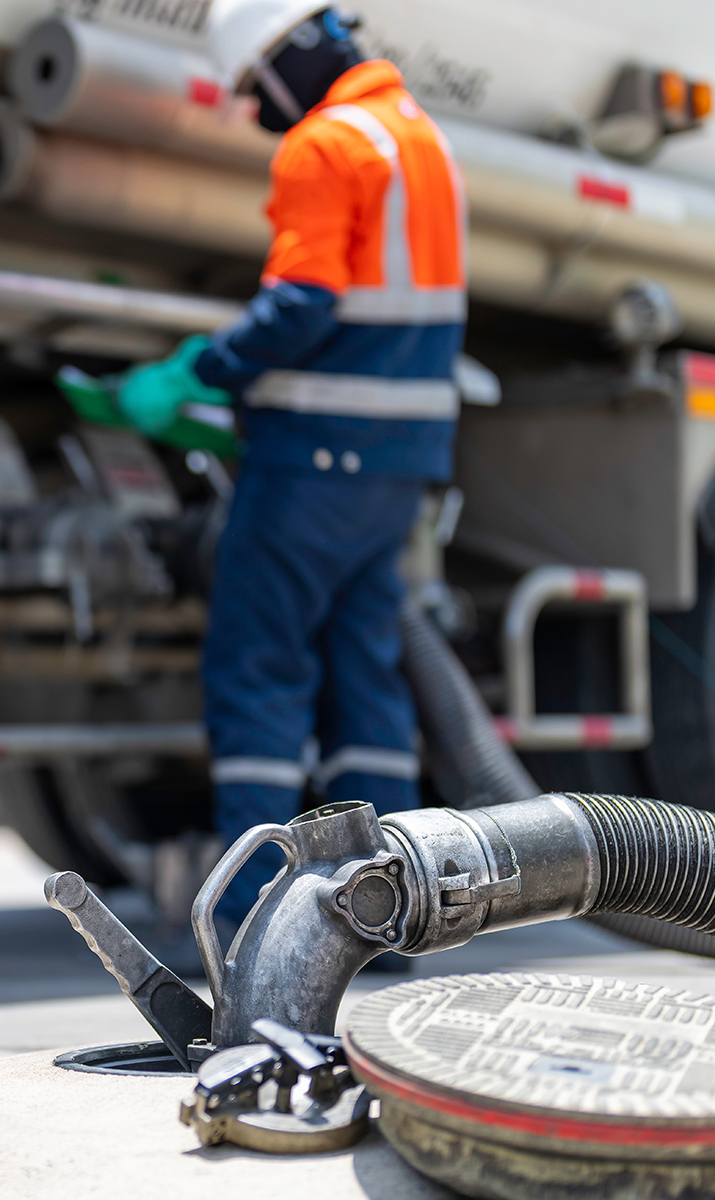
transportation-fueltruck-delivering-gasoline

CONNECTED GAS DETECTION AND LONE WORKER MONITORING FOR THE TRANSPORTATION AND LOGISTICS INDUSTRY.

Blackline can help mitigate risks for transportation and logistics workers with our ecosystem of connected safety solutions and analytics. We can help you get your workers home safe—every day—with lone worker devices, personal gas detectors and area gas monitors that protect them from explosions, falls, confined space hazards, dangerous toxic gases and VOCs, or working alone.

Sicherheit für allein arbeitende Personen Persönliche Gasdetektion Gebietsüberwachung
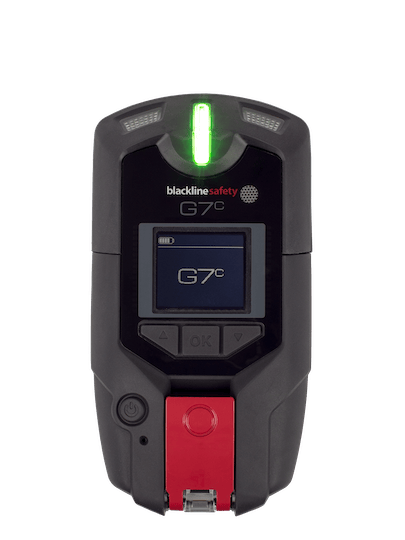
G7c-Alleinarbeiter-Front2 g7c-Multigas-g7x-Einzelgasdetektor

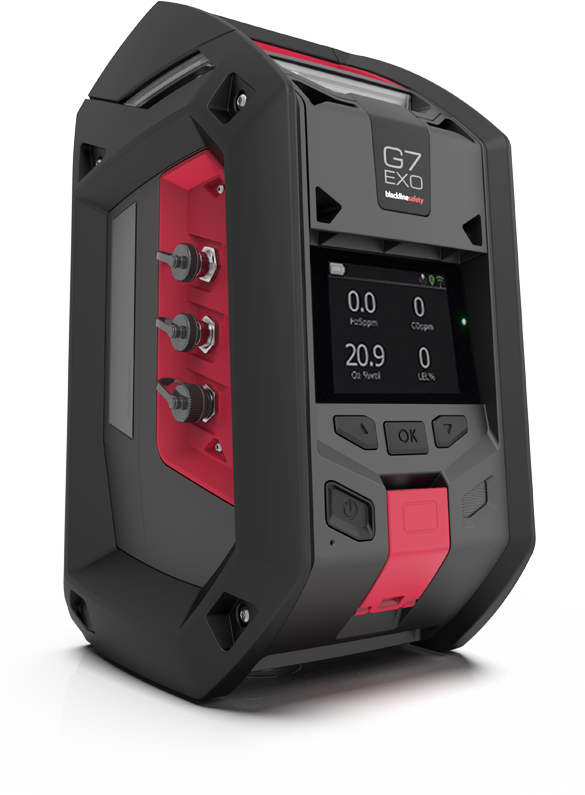
G7 EXO-Bereichsmonitor

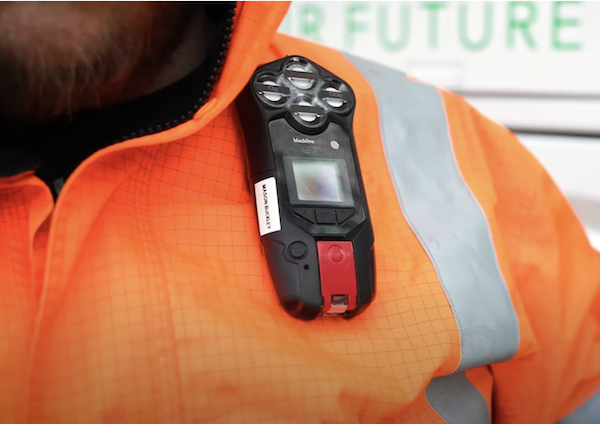
Lone workers such as drivers, surveyors / engineers, warehouse staff and forklift operators, all work independently at times in various roles and may require immediate assistance in case an incident occurs. 

MEHR ERFAHREN

Various gas hazards may become present during transportation or hazardous materials. Workers need a connected safety solution like G7 to ensure they are always safe. 

MEHR ERFAHREN

When it comes to monitoring the air quality in warehouses, refrigeration storage units or distribution facilities, G7 EXO deploys in minutes, delivering reliable connectivity for 100+ days. 

MEHR ERFAHREN

Transportation and Logistics Toxic and Combustible Gas Hazards

  • Wichtigste Gefahren durch Gas
  • Road transportation often carries the risk of flammable liquids and gases such as gasoline and propane which can pose a significant fire hazard in the event of an accident or spill. Poorly tuned engines or defective exhaust systems also run the risk of CO exposure.
  • Rail transportation also carries flammable liquids and gases such as ethanol, crude oil and propane. Transported toxic gases like vinyl chloride and other Volatile Organic Compounds (VOCs), chlorine and ammonia pose a risk to human health in the event of a leak.
  • Air transportation accounts for the shipping of 1.25 million packages of dangerous goods per year including flammable liquids and foods, pharmaceuticals and vaccines that use dry ice as a refrigerant which releases CO2 as it melts. Jet engines emit high amounts of CO2, and small amounts of NOx, CO, and VOCs.
  • Water transportation- flammable liquids and gases such as LNG are often transported via tankers which can pose a combustible gas hazard. The many types of confined spaces on ships are areas of risk where various gases can accumulate or oxygen can be displaced.
  • All methods of transportation emit CO from exhaust fumes, which pose a risk to workers and nearby communities.
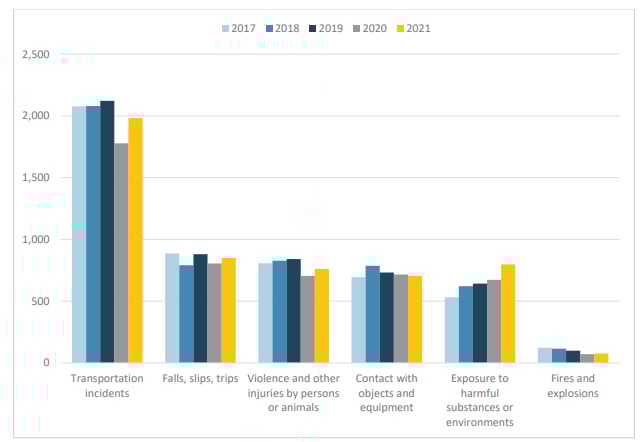
  • According to the Bureau of Labor Statistics, there were 798 worker fatalities from harmful substances or environments, within the US, in 2021.

In 2021, there was a total of 1,523 fatal worker injuries from transportation and material moving within the US.

(BLS, 2022)

Transportation and Logistics Lone Worker Risks

  • Commercial driving isn't a simple task. Accidents on the road are the most significant risk to transportation workers. Between 25-33% of all work-related deaths are caused by motor vehicle crashes (brightmile, 2020). In these instances, lone workers need an easy way to call for help. Our G7 lone worker devices offer fall and no-motion detection, missed check-in alarms and an SOS latch that can be pulled to call for immediate assistance.
  • Slips, trips, and falls are the number one cause of non-fatal injuries for transportation and logistics workers. Devices with fall detection can immediately alert monitoring personnel of an incident that may require assistance or medical attention.
  • Loading and unloading materials can cause injuries if precautions aren't followed. Forklifts were responsible for 70 worked-related deaths in 2021, and 7,290 injuries (NSC). Safety measures, like being able to pull G7's SOS latch can alert monitoring personnel of a lone worker requiring help.
  • Public transportation and logistics workers such as couriers can face aggression and violence when working with the public. 
  • Lone worker hazards like those listed above are the leading causes of workplace fatalities (BLS) and are common in the transportation industry, as categorized below.

Fatal work injuries by major event or exposure, 2017-21
logistics-transporation-fatalities-lone-worker


Die Konnektivität und Software zum zusätzlichen Schutz Ihres Teams.

Blackline’s connected safety and robust software offering provide the transportation and logistics industry with solutions that offer ultimate protection from worksite hazards and help you run a more efficient operation.

Sicherheit auf höchstem Niveau – Über das Online-Portal Blackline Live können Sie Ihre mit G7 verbundenen Sicherheitsgeräte verwalten, Ihre Anlage und das Wohlergehen Ihrer Mitarbeiter in Echtzeit überwachen, auf Notfälle reagieren und Berichte zu den gesammelten Daten erstellen. Einfache Compliance reicht nicht mehr aus.

Unübertroffene Transparenz – Blackline Analytics bietet Ihnen in einem einzigen, benutzerfreundlichen Tool einen vollständigen Überblick über die Konformitäts-, Nutzungs- und Alarmdaten Ihrer vernetzten Sicherheitsflotte. Analysieren Sie Echtzeit- und historische Daten, um potenziell gefährliche Situationen zu antizipieren und Unfälle zu verhindern.

Verbesserte Produktivität – Vernetzte Geräte liefern Daten, die Möglichkeiten zur Steigerung der betrieblichen Effizienz aufzeigen und das Potenzial bieten, Millionen an entgangenen Einnahmen einzusparen.

Optimierte Reaktionen – Umfassende Sicherheitsüberwachung und Massenbenachrichtigungen ermöglichen Ihnen eine vollständige und schnelle Kontrolle über Evakuierungen und das Notfallmanagement.

Immer einsatzbereit – Das hauseigene Safety Operations Center von Blackline ist rund um die Uhr mit professionell geschulten Überwachungsmitarbeitern besetzt, die sich ausschließlich um die Sicherheit Ihrer Mitarbeiter kümmern.

Die vernetzten Geräte, die Sie für unvergleichliche Sicherheit benötigen.

Mit der umfassenden Palette an Sicherheitsgeräten von Blackline erhalten Sie ein komplettes Ökosystem, das keinen Aspekt der Sicherheit von Mitarbeitern oder Arbeitsstätten dem Zufall überlässt. Ob Sie nun persönliche Sicherheitsüberwachung, Gasdetektion oder Bereichsüberwachung benötigen – jede G7-Lösung bietet schlüsselfertige Konnektivität und Vielseitigkeit.

Zuverlässiger Schutz – Überwachung giftfreier brennbarer Gase mit breitbandiger UEG-Erkennung

Effiziente Ausführung – In wenigen Minuten verbinden, unabhängig davon, wo das Gerät platziert oder getragen wird

Für extreme Bedingungen gebaut – Bewältigen Sie schwierige und raue Bedingungen auf jeder Baustelle, überall auf der Welt.

Bereit und zuverlässig – Dank der Batterielebensdauer von über 100 Tagen des G7 EXO können Geräte länger in Betrieb bleiben, wodurch weniger Personal für den Austausch von Batterien oder Geräten und weniger Genehmigungen erforderlich sind.

Direkte Cloud-Konnektivität – Branchenführende Mobilfunk- und optionale Satellitenkonnektivität für abgelegene Gebiete (z. B. können Sie die magnetische Satellitenbrücke von Ihrem Lkw auf Ihr ATV mitnehmen) und alle Daten direkt in die Cloud streamen.

Geringe Betriebskosten – Dank der besonders langen Akkulaufzeit des G7 EXO müssen keine zusätzlichen Monitore gekauft werden, wodurch Sie mehrere Tausend Euro sparen. Und mit verbundenen Wearables können Sie ein verlorenes Gerät ganz einfach wiederfinden.

Sofortige Benachrichtigung – Text- und E-Mail-Benachrichtigungen halten Sie über den Gerätestatus und aktive Situationen auf dem Laufenden.

Kein Unsinn – Eliminieren Sie die Notwendigkeit von UEG-Korrekturfaktoren und minimieren Sie unnötige und kostspielige Evakuierungen aufgrund falscher Messwerte.

Maximale Flexibilität – Tausende von Gasdetektionskonfigurationen verfügbar, von Ein-Gas- bis zu Fünf-Gas-Detektoren, mit oder ohne Pumpen

Kompromisslose Sicherheit – Umfangreiche Sicherheitsfunktionen für Personen, wie Sturzmelder, Alarm bei versäumtem Check-in, SOS-Taste zum Abrufen sofortiger Hilfe und Bewegungsmelder, Zwei-Wege-Kommunikation und Push-to-Talk-Funktion.

ZUSÄTZLICHE RESSOURCEN

DER WERT DER VERNETZTEN SICHERHEIT FÜR DIE EINZELGASMESSUNG

Nutzung von Daten zur Erstellung eines proaktiven und effizienten Sicherheitsprogramms

Vernetzte Gasdetektion ist nicht mehr die Technologie der Zukunft. Sie ist bereits heute verfügbar, genau hier und jetz
, und dabei kostengünstiger, nachhaltiger und einfacher, als Sie denken.

NIEMANDEN ZURÜCKLASSEN

WIE VERNETZTE SICHERHEITSTECHNOLOGIE DAS EVAKUIERUNGSMANAGEMENT OPTIMIEREN KANN

Das Evakuierungsmanagement ist ein wesentlicher Bestandteil der Sicherheitsplanung für Öl- und Gasbetriebe. Es ist von entscheidender Bedeutung, darauf vorbereitet zu sein, das Personal im Notfall schnell und sicher zu evakuieren, da jede Sekunde zählt, wenn Menschenleben auf dem Spiel stehen.

BRENNBARES GAS UND SEINE ERKENNUNG – WEISSBUCH

INFORMATIONSBOGEN ZU BRENNBAREN GASEN UND MPS-SENSOREN

Kontaktieren Sie uns, um mehr zu erfahren.