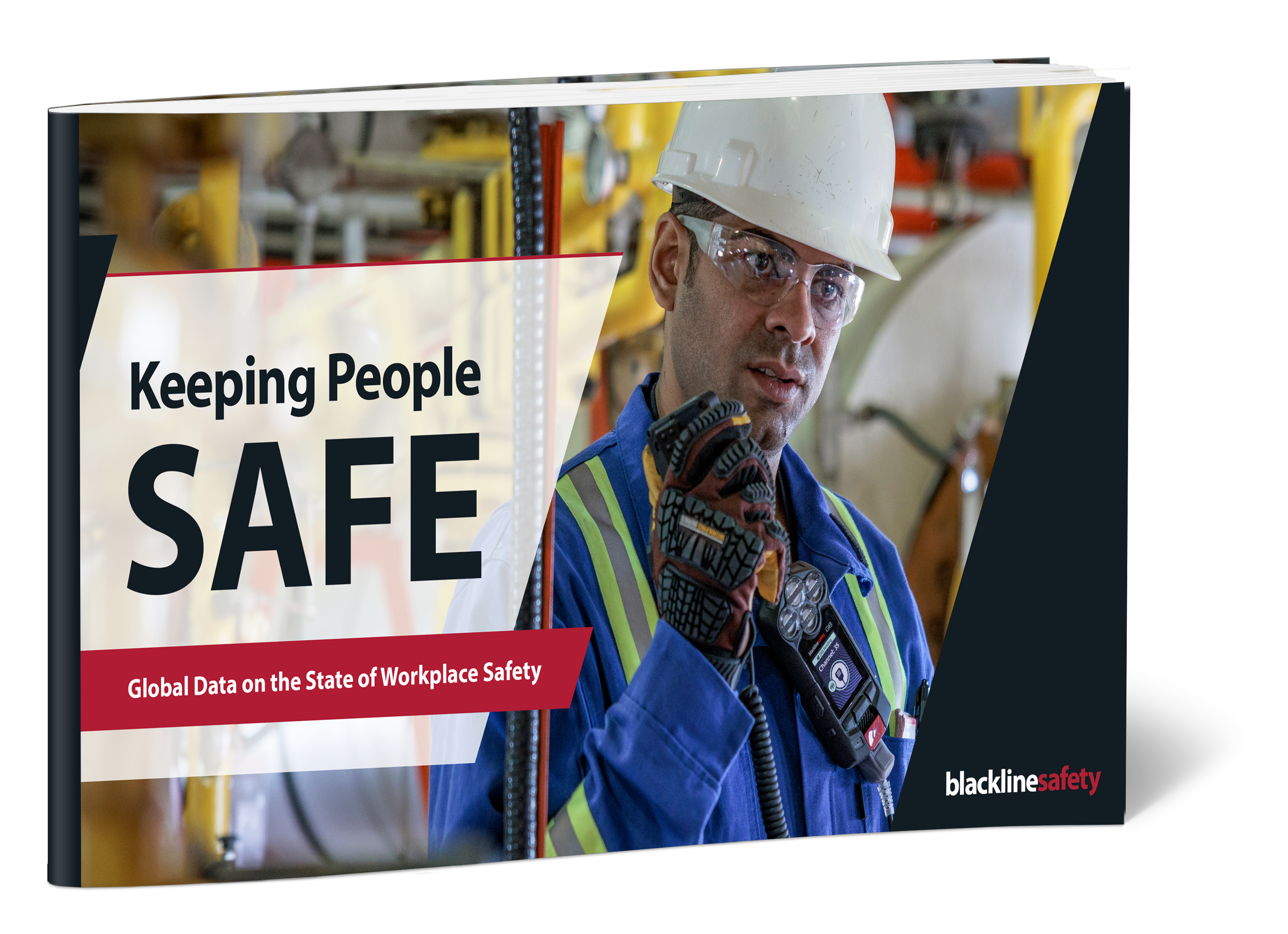
Safety and productivity go hand in hand, but even with strong investment in training, tools, and technology, results don't always match expectations. This research explores where workplace safety stands today, and where it’s going in the next two years, so you can build safer workplaces and get the most out of your safety investments.
Keeping People Safe
About the research:
200
7
6
Workplace safety is at an inflection point.
Health and safety budgets will maintain or grow in the next two years.
Top 5 budget priorities:
There’s a gap between safety protocol and real-world behavior.
Expectations don’t entirely align with reality when it comes to workplace safety. We see this in the number of incidents commonly experienced across industries. According to safety leaders, possible reasons for this gap include failure to address root causes of safety issues, and disconnections between the people working, the processes they work within, and the technology they employ.
Injuries that lead to lost time stubbornly persist.
This misalignment between understanding and outcomes demonstrates an opportunity to assess how safety investments balance foundational prevention measures, such as training, with predictive approaches that use data to surface risk before it escalates into injury. This raises a deeper question: are organizations investing enough in predictive capabilities — using data and real-time visibility to identify risk patterns — or relying primarily on training and response protocols?

Training is top-down instead of cultural.
When training over-indexes on rules the focus becomes about avoiding mistakes at all costs. But errors and accidents are inevitable, so this approach has the potential to reduce trust. A cultural approach to training treats workers as active participants and connects learning to real-world context. Organizations don’t necessarily need more training —leaders are investing here already — but training that is more connected.

Data analysis is largely retrospective and reactive — but the future is predictive.
Download the full report and evolve your safety program today.
Blackline offers the best in connected safety for your workers.
See how Blackline’s safety products and platform can take your safety to the next level.
FAQs
Do safety leaders believe safety and productivity are in conflict?
Almost universally, no. 97% of safety professionals surveyed view safety and productivity as linked rather than competing priorities, with strong safety cultures actually driving operational excellence.
Are safety budgets expected to grow?
Yes — 95% of organizations expect their safety budgets to increase or stay the same over the next two years. Worker training (46%) and workforce engagement (41%) top the list of budget priorities.
Why is there still a gap between safety protocols and real-world behavior?
64% of leaders see a disconnect between written protocols and actual worker behavior. Key reasons include siloed systems, protocols that don't reflect on-the-ground realities, and a lack of enterprise-wide safety mentality. Contractors show notably lower compliance (68%) than full-time staff (84%).
How common are workplace incidents?
71% of organizations experience recordable incidents or near-misses, and 53% of those result in injuries that lead to lost time — despite 75% of organizations considering themselves well-equipped to handle incidents.
Why do zero-incident goals cause problems?
76% of leaders say zero-incident goals persist but are unrealistic. Because they're nearly impossible to achieve, they often encourage workers to hide incidents rather than report them, eliminating the near-miss data organizations need to prevent future injuries.
Why do workers resist safety tools?
Cost is the top barrier (41.5%), but workers also push back on tools that feel intrusive, add device burden, or don't work reliably. Only 36% of workers have a "great deal" of trust in safety tools, suggesting room for improvement through better communication about how tools protect them.
Is safety data being used effectively?
Largely no. Most organizations rely on retrospective, lagging indicators — 73% review incident reports and 65% look at lost-time injuries. Only 33.5% of safety leaders spend time on predictive analytics, leaving significant value untapped.
What role will AI play in workplace safety?
65% of leaders expect integrated AI tools for risk prediction to become more prominent. Leaders already trust AI for safety data analytics (84%), training and simulation (83%), and predictive risk analytics (79%).
What is the single most important shift organizations need to make to improve safety?
Moving from a compliance-driven, reactive approach to a culture-driven, proactive one — where training, tools, and data reinforce each other in real time, enabling organizations to anticipate risk rather than just respond to it.
What are the three pillars of a strong safety culture?
The report identifies training and communication, tools and technology, and data and reporting as the three pillars. The key is getting all three working together — most organizations have all three but operate them in silos.