THE CHALLENGE
Closing the Connectivity Gap on Offshore Platforms
Offshore oil and gas platforms are among the most hazardous workplaces on earth. Often located hundreds of miles from shore, with the risk of extreme weather and potentially explosive atmospheres ever present, these sites and their complex infrastructure demand constant vigilance.
For operators like Perenco UK Ltd (PUK), a customer of Blackline’s UK distribution partner Shawcity Limited with nearly 40 offshore platforms in the North Sea, ensuring worker safety is non-negotiable. While fixed gas detection systems onboard vessels are designed to protect infrastructure, offshore workers—particularly those on Normally Unattended Installations (NUIs) and maintenance vessels—face unique risks. These personnel often work alone, making reliable communication and real-time monitoring critical.
Traditional portable gas detectors provide local alerts, but without live connectivity, safety teams have limited visibility into remote worker status or environmental conditions. In an emergency, delays in communication could have serious consequences.
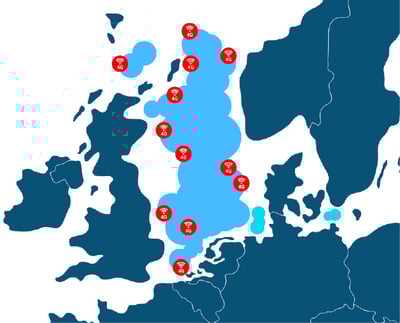
Perenco UK asked Shawcity a critical question: Could connected gas detection devices reliably operate offshore using 4G connectivity in the North Sea?
THE SOLUTION
Testing Connected Safety in Real Remote Conditions
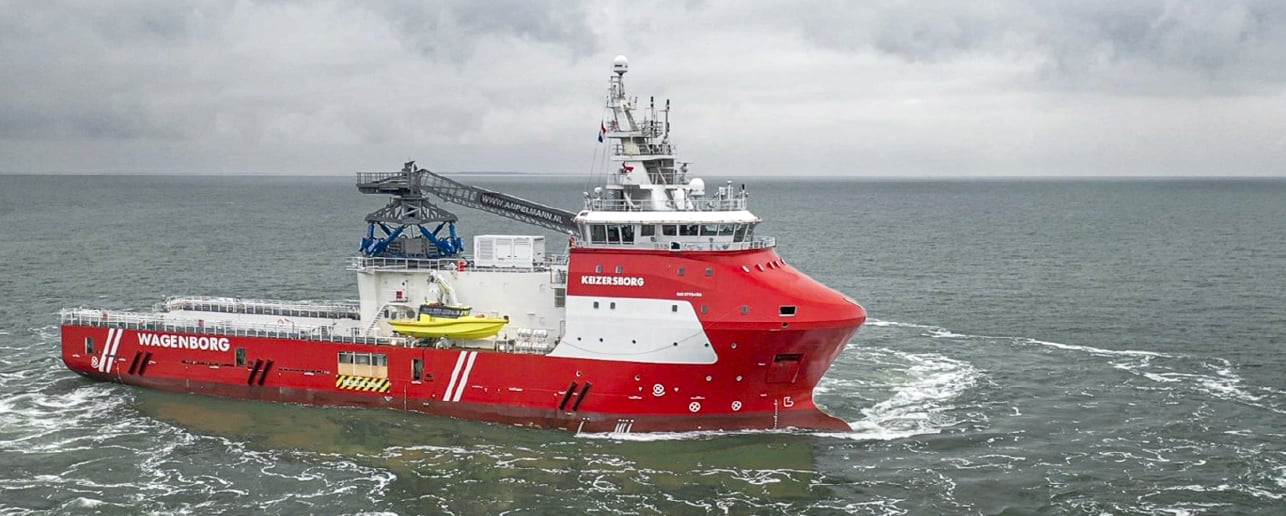
Perenco UK had already deployed connected gas detection technology at its Bacton gas terminal via Shawcity. Building on that success, PUK invited Shawcity to conduct an offshore proof-of-concept trial to demonstrate that connected gas detection devices—Blackline’s G7c wearable and EXO 8 portable area monitor — could reliably communicate via 4G while operating at sea.
Testing was conducted offshore using Perenco’s Keizerborg walk-to-work vessel in the North Sea, where devices connected to 4G networks with line of sight to GPS satellites. The devices were assessed for:
- 4G connectivity reliability
- Link to Blackline Live monitoring platform
- Real-time alert transmission
- Remote alarming capability
- Battery performance
THE RESULTS
From Trial to Trusted Offshore Safety Solution
Following the trial, Perenco UK confirmed that from Blackline devices:
- 4G connectivity was successfully established offshore
- Gas detection units connected reliably to Blackline Safety’s cloud-based platform
- All test emergency alerts were received
- Remote alarming functionality worked as expected
- EXO 8 delivered exceptional battery performance compared to similar area monitors
Even when temporarily out of range, devices stored data and automatically transmitted updates once reconnected, ensuring no critical information was lost.
For Perenco UK, the trial demonstrated more than connectivity—it proved that remote safety monitoring offshore is not only possible, but practical. With connected devices, safety teams can access:
 Real-time gas detection
- Man down and instant SOS alerting
- Worker locations in remote setting
- Cloud-connected monitoring accessible from any smart device
- Improve decision-making with cloud-based data access
As offshore operations evolve, particularly during decommissioning phases, connected safety technology offers a scalable solution that enhances protection without increasing complexity. What was once a barrier—connectivity at sea—is now a viable safety solution.
For NUIs and decommissioning work, where remote visibility is critical, this connectivity is a major step forward. The detectors performed reliably and the remote alarming was a valuable feature. We were also impressed with the EXO 8’s battery life compared to other area monitors, and the devices were simple and familiar for crews to use.
Ian Sloan | Instrument Engineer at Perenco UK
AT A GLANCE
%5B52%5D.png?width=2000&name=Perenco_Logo.svg%20(1)%5B52%5D.png)
-
Offshore workers on unmanned platforms faced high safety risks with limited visibility and delayed emergency response due to non-connected gas detectors.
- Perenco UK trialed Blackline connected gas detection devices via 4G offshore, enabling real-time monitoring, alerts, and cloud-based oversight.
- Platform reliably connected offshore, transmitted alerts and proved that remote monitoring is practical and effective.
STATS
40
Offshore platforms
100s
Of miles offshore
4G
Connectivity requirement