Blackline Safety is a technology leader driving innovation in the industrial workforce through IoT (Internet of Things). With connected safety devices and predictive analytics, Blackline enables companies to drive towards zero safety incidents and improved operational performance. Blackline provides wearable devices, personal and area gas monitoring, cloud-connected software and data analytics to meet demanding safety challenges and enhance overall productivity for organizations with customers in more than 75 countries. Armed with cellular and satellite connectivity, Blackline provides a lifeline to tens of thousands of people, having reported over 323 billion data-points and initiated over eight million emergency alerts. For more information, visit BlacklineSafety.com and connect with us on Facebook, X (formerly Twitter), LinkedIn and Instagram.
 Blackline Safety spoke with Dr. Matt Law, Director of the National Safety Council’s Work to Zero program.
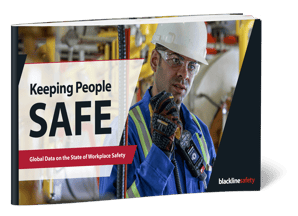
Blackline Safety conducted research for a report called Keeping People Safe: Global Data on the State of Workplace Safety in 2026. The results came from a third-party survey of 200 safety and operations leaders from around the globe, representing six different industries.
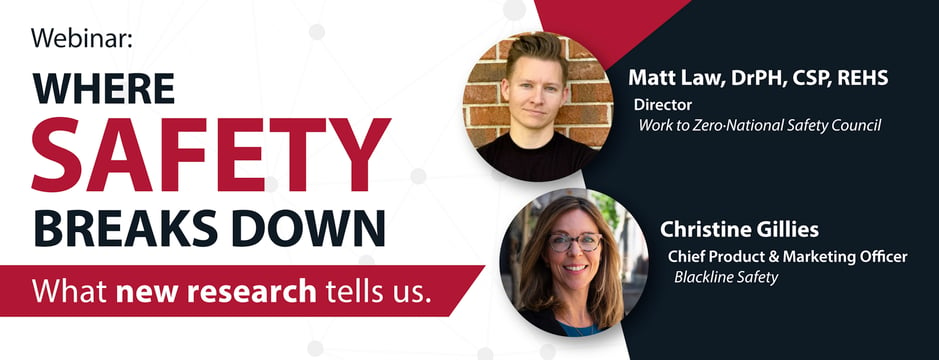
To discuss some of the real-world implications of this research, Blackline’s Chief Product and Marketing Officer, Christine Gillies, was joined in a webinar by Dr. Matt Law. Matt is Director of the Work to Zero program at the National Safety Council (NSC), a researcher, award-winning author, strategist, and host of the podcast Prove It To Me.
Here are some of the key moments of their conversation. Watch the full webinar here.
Q+A:
Blackline: To start off, one of the key findings from the research is that safety and productivity are not mutually exclusive, and 97% believe that workplace safety is fundamental to productivity. Does this ring true for you, Matt?
Matt: Yes, I think this is something that we've all known for a very long time — you cannot have a productive and sustainable workplace without safety being at the core. To make those concepts work efficiently together, they have to be built into processes together. So, these numbers are not surprising — it confirms exactly what we've suspected all along.
A lot of mature organizations with a safety program will see safety as a cost center rather than a cost benefit. But when you see that safety and productivity go hand in hand, you understand an investment in safety is an investment in productivity. So, it's not a cost center, it really is a cost savings in the long run.
We know that safety budgets are up—95% of safety budgets will either be maintained or will increase over the next two years—but the data also shows what we're calling the protocol-behavior gap. The research found that despite steady investment, and well understood and established safety protocols, there's still a disconnect between work imagined and work done.
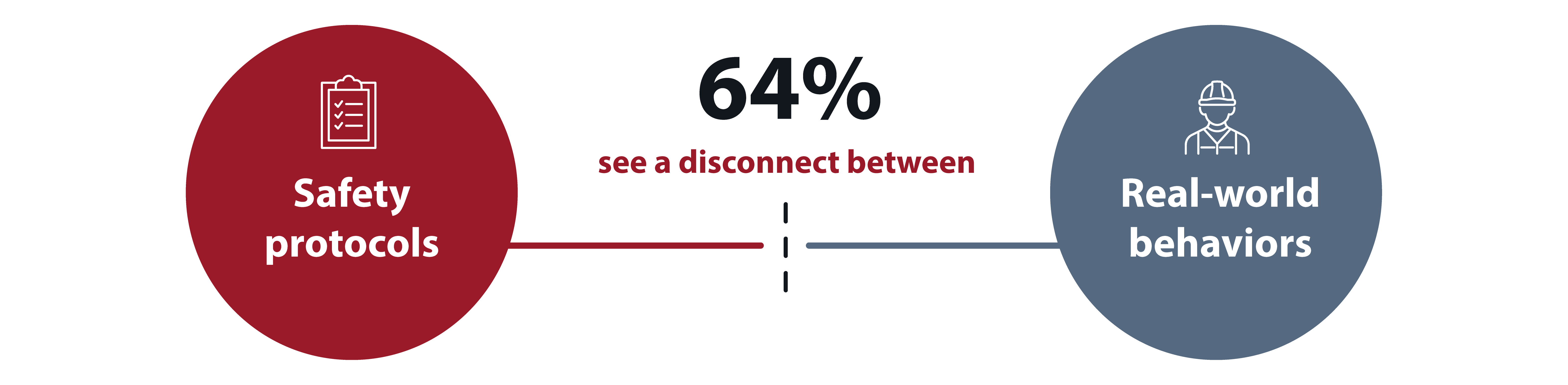
Matt: Absolutely, if not managed correctly there will be a disconnect. We had this initiative a couple of years ago focused on how to actually change behaviors. There are a lot of things that go into creating behavioral change aside from just writing a safety rule or a protocol. It's effectively measuring and managing the attitudes, the beliefs, the environment, the habits.
It's about helping organizations identify how they measure those things and what tools and technology do they need to measure and manage them. Just throwing a protocol in place doesn't necessarily give the worker all those tools for a behavior to happen, so it's no surprise to see a big disconnect here.
Especially with your role at NSC with the Work to Zero program, I’m keen to have you unpack for us that concept of zero incident goals, because we heard in the research that while these aspirational goals persist, they’re unrealistic and can end up actually driving the wrong behavior — underreporting, lack of trust, and occasionally missing those important leading indicators. Is that true?
Matt: I get into this conversation a lot when folks hear the name Work to Zero associated with our program, because there is a lot of crazy discourse around the word “zero.” And it's especially because of exactly you pointed out: if you set a goal in an organization of zero incidents — if that's what's being measured, and especially incentivized — then that's what's going to happen, right? You will lose reporting, you'll lose trust, you'll miss those leading indicators.
But I think it's in how that goal is used. Realistically, we're all working to reduce that number to zero. We don't want incidents to happen. We don't want fatalities to happen. But a lot of organizations end up putting that goal into place and they do absolutely nothing else to actually reach it. The difference with something like the Work To Zero program is not the word “zero,” it's the word “work.”
In our program, zero is the goal but we're doing all of the research and the advocacy and the implementation to make that number happen. If you don't build the system to make the goal happen, then it won’t.
How can organizations level up their safety programs to address some of the gaps and challenges that we've been talking about? Our report notes three pillars that make up a strong safety culture: training and communication, tools and technology, as well as data and reporting. Most organizations have all three, but few of them have them working together as a system to create a true strong safety culture.
Matt: In my experience working with organizations, creating a safety culture fails when these components themselves get siloed. I think a lot of folks interested in this topic have worked for an organization where you complete an incident investigation and the recommendation is “more training.” And we focus on just training and we think our culture is going to improve with just training.
But it's not just training. It's building all of the factors, the components, the attitudes, beliefs, and controls that allow a behavior to happen and allow that culture to be built. And that requires having the right tools and technology in place, gathering the right data, and having all of those things feed each other, recognizing that there is a connection between those three pillars.
Let’s finish off our conversation by looking to the future. So many organizations are sitting on a heap of valuable data from the many tools and procedures that make up their safety program, but they’re not necessarily leveraging that data for risk prevention. How do you see predictive analytics evolving?
Matt: I've had some conversations about predictive analytics lately, and this is absolutely a game changer. I think what's going to be important for organizations is to view it in the right way — what we're predicting is not necessarily what's exactly going to happen. What we're not doing with predictive analytics is gambling. What we are doing is coaching — taking that prediction and using it to coach our system components to do something different to make a better outcome. And I think that's really the magic of what predictive analytics is going to be for our safety programs.
Thank you for your time, Matt.