


Chief Product & Marketing Officer
Blackline Safety
Exclusive First Look: Keeping People Safe Report
3 DECEMBER 2025
ON-DEMAND WEBINAR
Be among the first to discover what’s ahead for workplace safety in 2026. In this webinar, Blackline Safety shared an early preview from their inaugural Keeping People Safe Report, based on a global survey of more than 200 safety leaders.
The full report won’t be released until January — this is your chance to get a first peek at the insights so you can act now.
SIGN-UP NOW to get the full report right in your inbox as soon as it is released.
You'll discover:
- The top trends redefining safety programs worldwide
- Where organizations are making progress—and where gaps remain
- Practical steps, using safety data, to move from reactive to proactive safety management
Who Should Watch? Health & safety advisors and managers, entry supervisors, industrial hygienists,
and anyone involved in safety in a company that has lone workers.
Transcript
Everyone. I'm Stasia DeMarco, Content Editor of Occupational Health and Safety Magazine.
Welcome to today's webinar, Exclusive First Look: Keeping People Safe for Border.
Fortunately, we have two experts with us today to discuss that topic. I'm talking about Christine Gillies and Phil Benson. Christine holds the position of Chief Product and Marketing Officer of Black Line Safety, where she manages the product management, marketing and communications programs and strategy for Blackline. With over 20 years of marketing experience, Christine has held leadership roles with other rapidly growing global technology and SaaS companies.
Prior to joining Blackline, Christine served as Director of Product and Client Marketing for Calgary software company, Benevity. Christine was also instrumental in developing technology product strategy and roadmaps during her time at Smart Technologies, where she held the role of Product Line Manager, Technology Product Management. Christine earned her MBA in International Business from the University of Calgary in 2003.
And also we have Phil Benson. Phil is Blackline Safety's Vice President of Product, overseeing Product Management, management, industrial design, U.S. Design, data engineering, business intelligence and AIML services.
With a background in designing industry-leading safety products at BW Technologies by Honeywell and interactive learning solutions at Smart Technologies, Phil brings deep expertise in developing user-centric, high impact solutions. At Blackline, he leads the development of a cohesive product portfolio, ensuring that every solution enhances customer confidence, usability and brand loyalty. His team is committed to pushing the boundaries of connected safety technology, delivering innovative and data-driven solutions that protect workers in the most challenging environments. I'd also like to point out that Blackline Safety is the sponsor of today's webinar and thank you to them.
Now, little housekeeping before we get started. At the end of the presentation, there will be a Q&A session where Christine will answer some questions from you. However, you can submit a question at any point during the webinar. If you want to submit a question, you're more than welcome to use the ask a question console on your screen.
Again, reminder, you can do this at any point during the webinar, during the Q&A. If you have any technical difficulties during the presentation, click on the Help button and that's located below the slide window and you will receive technical assistance.
Also, today's presentation is quite detailed and I encourage you to keep it. You can find a copy of the slides under the blue Resources tab.
And after today's event, you'll receive an email containing a link to an archive of today's presentation so you can go back and review it again or share it with a colleague who may have missed it. All right, it looks like we're ready to kick off today's presentation, so I shall hand things over to Christine and Phil.
Thanks so much Anastasia and thanks so much to Occupational Health and Safety for your partnership in bringing this webinar to life.
My name is Christine Gillis and I want to thank all of you for joining us today. I'm super excited to give you all an exclusive first look at a report that we're bringing to that we'll be releasing in the new year and we will it's called the Keeping People Safe Report.
And I see here that we have attendees joining from all over the world, 30+ countries, So it's great that all of you have tuned in today.
We also have attendees from a variety of sectors, food and beverage, manufacturing, construction, transportation.
And all of us are unified in health and safety and ensuring that we're bringing people home safe to their families at the end of the day. So let's get to it.
Thank you again Anastasia for the introduction. That was robust, off the top. My name is Christine Gillies and I head up the product and marketing function here at Blackline Safety.
In addition to being here for about five years, I've also spent some time at Aware360, which was a health and safety software company focusing on loan worker apps.
And Phil.
Thanks. Hi, everyone. I'm Phil Benson. I'm the Vice President of Product here at Blackline. So there's a pretty good description of sort of what that entails at Blackline.
I started my safety and technology career at Honeywell in their Safety and Productivity Solutions division.
As described, spent a number of years in education technology, then came back to BlackLine. So, I've been at BlackLine, or back to safety, rather, technology here at BlackLine for about eleven years. And so a lot of this report is really interesting and relevant to me because one of my teams is data, product management, of course, design, but then data engineering, BI, AI. And kinda like interesting side note is I'm actually here at the Amazon Web Services Conference in Las Vegas.
So we're based in Calgary, Alberta, but I'm here in Vegas, and it's this massive cloud software conference. And as you can imagine, almost every presentation touches on AI in some way, using data, utilizing data, AI. So we're talking large language models and generative AI and agentic workflows is like really big. So it's been really exciting to sort of to see that and think about how to how our company and how companies in general can apply that to safety and to our customers, so it really ties into some of the data that we're collecting here, so it's an exciting experience.
Just a bit of quick context on Blackline Safety. If you're not as familiar with us, we've been focused on connected worker safety for over twenty years. We design purpose-built wearables and area monitors that bring together gas detection, loan worker protection, and also two-way voice communication, text communication, and cloud analytics, as I've described, into one platform. So today, support companies in more than 75 countries, helping protect workers across energy, manufacturing, utility, and other industrial environments.
What's really unique about our vantage point at Blackline is that we do get a line of sight into the health and safety programs of over 2,500 customers around the world.
And in addition to that, we also have millions of data points, anonymized data points that we are able to analyze and ideally use to prevent and predict health and safety incidents as we partner with our customers. So we really have a front row seat into how the health and safety space is evolving. But we also appreciate that our customers' health and safety program, it's only a slice of what is really happening globally in terms of health and safety and so that's why we wanted to commission a arm's length report and we're going to share an exclusive first look with all of you here today of some of those highlights.
And so we're going to get into the report methodology, so who did we talk to and how did we commission this report.
We're going to share some statistics and initial key findings that we know that you'll find helpful and then talk to you a little further about how to access the full report and we'll also take some questions. So again we encourage you to populate some questions in the chat there and Phil and I will be available to answer those questions whether it's on the report or about black line safety or just health and safety questions that you may have in general.
So report methodology.
It was important to us in order to make sure that we were publishing objective data and again truly understanding what's happening globally in terms of health and safety programming that we partner with a third party. And so we commissioned a leading third-party research firm called Newton X.
And what we liked about them is that they have experience working in the health and safety space and specifically, they have worked with the National Safety Council in the United States.
So we were really happy with working with them. We talked to over two hundred health and safety and operational leaders from around the world and we augmented that quantitative data with seven in-depth interviews and we did that so we could really understand the nuances of what health and safety leaders are facing and really hear firsthand that voice of the market to again make sure that we're not jumping to conclusions we really understand the language that's being used and some of those again more nuanced perspectives that are out there. And then finally we're taking the results of this survey and we are benchmarking it and contrasting it against our three billion data points that Blackline Safety has been collecting in an anonymous way over the last ten years.
In terms of who responded, you'll see on the left hand side that we have quite a variety of industries represented, many industrial companies represented but there's also fire and hazmat, petrochemical, transportation, utilities as well as energy.
And in terms of function, on the right-hand side you can see here a pie chart that shows where within the organization these health and safety leaders are reporting from. And so not surprising we see workplace safety, health and safety, but we also see that about a quarter of respondents still have or they have health and safety functions that sit within human resources as well as operations.
And then in terms of who we spoke to regarding their level, we talked to people all the way from the C-suite Chief Operating Officers, we had Vice President of risk, health risk and safety, Director and Manager levels too. So there's a broad range of the levels that are represented in the report and we hope to be able to slice and dice according to various variables here in the final report that will be available in early 2026.
So let's get into it. Enough talking about it. Let's dive into some of the results that we found from this survey.
Yeah, great. I'll start here. So we know that keeping people safe is a top priority for you. That's why you're joining us today. But like everything that involves a human element, the survey data really confirmed for us that there's a gap between protocol and real-world behavior. In fact, 64% of our survey respondents confirmed that they recognize that there's a gap between their day-to-day operations, like what is documented and then what is actually happening on the worksite.
We have this really telling quote from one of our interviewees, and if there's any parents on the call, they'll definitely understand the elements of this. So the quote was, safety is a practice. It's like brushing your teeth. The problem is that all too often people don't practice safety when no one is watching that, when no one is watching, and I love that. It really drives home the importance of cultivating a holistic safety integrated culture, through practice.
And this gap that we're seeing between protocol and behavior, it actually then becomes a gap between the expectations of workplace safety and the reality of the amount of incidents that we commonly see.
Our survey respondents also responded with a statistic that seemed somewhat paradoxical with and so let me get into that here. So seventy five percent of respondents feel very well equipped to handle health and safety incidences when they occur.
However, in contrast, there's still more than half of health and safety incidents. They involve injuries and those injuries unfortunately, can lead to not only lost time, but there are cultural impacts, there's resource implications.
Unfortunately, there's reputational impacts.
When someone is injured, it's not just happening to that person.
It reverberates throughout the company and even beyond often impacting the family. And so why the disconnect? While you all are feeling very well-equipped to handle incidents, there's still this question about why so many injuries are still occurring. And so while when we look at that, let's look at ways that we can improve health and safety culture in order to minimize the severity of those incidents when they occur.
So how do we improve health safety programs and improve a health and safety culture within an organization? And so what we learned from the survey respondents is that you all are feeling very confident in terms of the volume of training, processes and communications that make up your health and safety programs. That's very well established and understood.
There's no shortage of PPE tools and technology that's available on the market and also within your organizations that you've rolled out.
And then data and reporting, especially when we're talking about technologies and connected devices, we are capturing data from the frontline workers and that data and reporting is often being reviewed, sometimes not reviewed, but is often being reviewed by a single manager or somebody in quote unquote, you know the corporate head office or someone like yourself who's running a program. But this is where we have a disconnect and what we call the missing link.
And what's just as relevant is the kinds of data that we're looking at and sharing back to our teams, and that matters a great deal if we wanna be more proactive about safety, and the vast majority of survey respondents agreed that they did.
Proactive safety is very important to them. So, this like we're kind of referring to this as this closed loop approach is how we build stronger safety cultures that create more productive teams. So, if we dig in a little bit deeper to what the research told us about each of these critical elements, so there's training, tools, and data, and if we start with training, go to the next slide, we know that training is a critical pillar to creating safe workplaces. I think that's acknowledged by everyone here, and in fact, worker training at 46% and workforce engagement at 41% are the two biggest investment priorities across industries.
So that was sort of almost agreed upon across industries that the training and engagement are are their two tops. And on top of that, we learned that 95% expect that their safety budgets will remain the same or even increase, with less than 5% expecting that budgets will decrease from the previous year. So training is already understood to play an important role, and the budget ideally is going to be there, and the ROI of training is clear.
Let's take a look at some questions that we asked about health and safety tools and the trust level that respondents reported in those tools.
And so when we talk about tools, we're really saying that includes PPE, health and safety wearable devices, gas monitors, area monitors, inspection audits, permitting health and safety software, and so 92% of workers report that they have quote unquote some trust in those tools.
However, only 36% of frontline workers state that they have a great deal of trust in those two, and so there's obviously room to close a gap here and we're gonna dig into how we do that in the final report.
Yeah, and what we've seen when we're analyzing the data is, you know, what's getting in the way of trust, the first thing that comes up is workers' to day frontline experience. So if the tools are seen and perceived as something that slows down their tasks, they start to lose trust in the usefulness very quickly. If the tools are seen as something that doesn't slow them down or can even help them do their work, then trust grows. So it's not just about the tools and how much they trust them inherently, it's about how does that affect their day to day jobs.
A personal example of Blackline, where we saw that in action is when we were developing our G6, like a connected wearable device, we saw that workers in the field as we were developing it, they were already wearing, like, two or three different devices. They might have a radio, a man-down safety monitor, a gas monitor, and it was kinda funny. They called it the Christmas tree effect, like they were wearing all of these safety things. And when we came out with the G7, we made a single device that could incorporate all three of these functions, and that sort of helped them with their day-to-day. It simplified their day-to-day, and that just made adoption so much easier.
It was doing the same things, but doing it all together and making their job just a little bit easier, that really helps adoption.
Another issue that does come up quite a bit, related to technologies, wearable technologies is the issue of privacy, surveillance concerns and or big brother concerns. Now I have to say with my years of experience in the health and safety space that I do think that we're overcoming this concern but depending on what stage of adoption you're at in terms of technology, even what geography you're in and what sector you're in, it can still bubble up when you're rolling out a new technology.
And so what we've found is that actually sometimes the greatest opponents or the greatest skeptics can become your greatest champions when it comes to rolling out a new technology.
We recently had one of our customers talk to us about an employee named James who was again quite skeptical about wearing a monitoring device. And he was not concerned about his sort of unsmart or dumb PPE, but wasn't sure about a device that he felt that could be tracking his location or even possibly being used to determine is he where he's supposed to be on time. He just didn't have comfort with it.
And so James unfortunately had a fall, quite a serious fall down a flight of stairs and right away his G7 device alerted that he had a fall and his location was conveyed immediately to our safety operations centre. And the agent stayed on the line with him, was able to find out that he was conscious, reassured him that help was on the way and that everything was gonna be okay. And when James got back to work, again, he was the most proud advocate of having had his G7 device.
And that story was not only shared here internally at Blackline, but it was very effective in terms of allaying concerns that were bubbling up or maybe even just hiding across the organization.
When James was able to say, yeah, he went from fearing this big brother to seeing the G7 as his quote-unquote buddy, his best friend. And in fact, he said that he double-checked that he had his device with him just like he did his wallet and his keys. And so again, just wanted to take a moment because when it comes to rolling out new technologies, investing in new frontline technologies for frontline workers, this can come up. And about 18 months ago, we hosted a webinar with OH&S and we've also published a few resources and those links are available in the resources section that's in your panel here, so feel free if that's of interest to you to dig in a little bit more there.
Okay. So, you know, what's being measured?
The data is that final piece of the puzzle, so we keep using this loop analogy. So it's final piece of that loop, and it's the element that has the most potential to push a workplace safety forward. When we asked what types of data that they were collecting and analyzing when we asked our survey respondents, this is what they were saying.
73% of them are looking at incident reports, near miss reports.
65% said they were looking at recordable injuries, lost time incidents, and 64% said they analyzed root cause of incidents. So that probably not shocking to people attending this session, but only 35% are spending their time on predictive analytics. What this tells us is that data is being collected and reviewed largely in retrospective actions, which is not a bad thing. When you analyze data in an incident, you'll learn a lot about the incident, but then less time is being spent looking at leading indicators that could ideally stop incidents like that from happening in the first place.
So, again, from a Blackline perspective, just anecdotally is predictive analytics sounds really complicated, but it doesn't have to be obviously, I'm very interested and active in machine learning algorithms and how we can use AI, and forget all of that for a second. Yes, predictive analytics through AI is very powerful, but it doesn't have to be that complicated. Like, we found working with one of our largest customers when we first onboarded them, it was the first time they could see gas exposures and locations together. And what they noticed really quickly was that they were seeing methane exposures in locations that they didn't expect.
And at first, they assumed that, you know, they had sort of multiple leaks in weird areas. But then as they dug a little deeper, they could see that it was only happening, you know, with certain employees at certain times. And so when they just dug in a little bit more, they interviewed a couple of employees, and it was clear that it was a process problem in the way that they were taking samples. So when they take they were taking these samples in a way that they shouldn't, they were, inadvertently exposing the area to methane, to explosive gas, and that was an easy fix with training.
That's an example of a simple way that you can use data to be predictive as opposed to finding out the hard way after an incident.
Let's go to the next slide for me. Darcy, thanks.
When you get key data in the hands of frontline workers, it makes training far more engaging and it makes the tools easier to trust when they can be exposed to it, and it helps organizations move beyond just compliance to a safety culture. Don't just do it because I said so, look at the data and respect what I inspect. That's a quote I heard once that I really like. If people know that you as a business care about it and you expose it to them, then that becomes something that they need to start caring about themselves.
Then safety is no longer seen as the responsibility of just a manager in the office, and that was a really big theme that came out in the in-depth interviews that we conducted in the study is that there is this growing expectation within businesses that everybody is a safety manager. This safety is responsibility of everyone, and we heard over and over again, it can't be a top-down exercise, it has to be cultural.
So the bottom line is that the more people who have access to the tools and data, the more they feel empowered to be part of this safety solution.
As one example, this is from our own internal data at Blackline. We know that organizations that actively use, for example, our Blackline's usage and compliance report, this is how people are using devices. Are they using devices? So, the companies that review those reports actually have a 13% higher compliance rate compared to the companies that don't. So, this suggests that there's a really strong link between engaging with data and actually putting the results to use when it comes to compliance performance. And this sort of needs to be integrated at every level of your organization.
We asked about Zero Incident goals, and we learned that 76% of you are still reporting the unrealistic Zero Incident goals that exist out there.
Despite research telling us, there's plenty of academic research that has been published that shows that Zero Incident goals for an organization actually create paradoxically the opposite behavior that you're trying to encourage. It drives information underground, it creates fear, breeds complacency, and very much is antithetical to the goal of trying to make the workplace more safe.
In fact, the Journal of Safety Research just recently published that there's empirical evidence it is lacking for the success of zero safety targets. And so we know that this is an area of opportunity, frustration for many of you, and education that's required in helping your leaders and the leadership of companies when it comes to Zero Incident goals. This is a topic that we're going to double click on or get into further in the report itself.
Yeah. The the study really revealed that safety and operations leaders, they see themselves in that that bottom left hand corner, that reactive compliance-driven. They told us to feel a bit stuck there. You know, the sentiment and some of the quotes we got, it was saying, no. We're offering the same kind of training we've always offered. We're looking at incidents after they happen, and we're trying to learn from them, and we're focusing on our safety strategy and compliance, and that just forces us to be reactive.
But they also said loud and clear that where they want to be is in the top right corner. They want to move away from reactive compliance and towards proactive safety-first cultures. The good news is that some of this early data we shared today shows that when we take advantage of technology and data that's available to us, we have these tools to unlock that shift.
And so that is a preview of some of the highlights. This report is literally hot off the press as it only became available to us in the last ten days or so. And so we've had some fun over the last week or so pulling out a few highlights. The full report will be available in early 2026.
And if you want to access that, I encourage you to use this QR code so you can make sure that you're one of the first to receive it.
Other topics that we'll be covering is the role of AI in HSC. Of course, you can't tune into the media or look at your smartphone without being inundated with AI. And to be honest, everybody is still figuring it out. And so we're going to hear about the plans from health and safety managers when it comes to how they're implementing AI or planning to implement AI when it comes to turnover.
How does that affect training and programming, working with contractors, safety versus productivity? That's a topic that often comes up. And how do you wrestle with those two sometimes competing priorities. And so, yeah, we're very excited to share the full report with you early in the new year.
And now if you haven't asked a question, I encourage you to do so in the chat.
Want to thank all of you, but let's turn this session over to you and have some questions come in for Phil and I to respond to.
All right, let's get into our Q&A and thanks so much for you guys for that presentation.
I noticed AI was a topic you were just touching on, and it's in the full report. Could you tell us a little bit more about that?
Yeah. Yeah. Definitely. So so we talked a little bit about AI. AI is a very broad topic, and it's hard to pinpoint exactly how you're going to use it.
So, I try and talk about it in I'll talk about it in terms of what Blackline's doing, just to kind of reflect on different ways you can use this as a tool. So, Blackline has a lot of data. We've talked about it a little bit in this report. We're gonna talk about it more in the full report.
And what you can do when you have lots of data, especially well-structured data like the kinds that Blackline has, is you can use machine learning algorithms to predict. Right? So you can feed in a bunch of data, you can figure out what kind of outcomes you're you're looking to flag, and then you can train the model to understand that, just, you know, with basically statistics. It's it's mathematical operations to train a model, and then you can use that to predict in the future.
Right? So that can automatically give you information. So that's kinda like classic machine learning. The more interesting pieces that I think everyone's very excited about, and you can think about it in context of ChatGPT, is this large language model.
It's generative AI. It's the idea that you can use very similar machine learning principles, but it's very extensible to being able to predict what someone's going to say, predict the right answer, and even agentic AI is sort of the third phase of that, and that is where this model, this large language model, can actually make choices for you. So in context of safety, as I talk about, the first level is just being predictive, being able to go, well, if these things happen, typically there's this outcome. Let's just learn from that.
The next one is just being able to be more efficient with your work from a health and safety point of view, and that's where you can use generative AI to read a bunch of documents for you and summarize or be able to help you better communicate with your team at their level. And then with Agent X solutions, they can make choices for you. They can make real-time choices for you within a workflow that can speed up that workflow and actually increase the quality of that workflow. So, again, I'm talking sort of broad terms, and that's a little bit intentional to say there's lots of different ways when thoughtfully applied that AI can really help out, you know, any industry, but I'm looking at it through the guise of safety based on what we do.
So and I think our report will touch a little bit on that, where we are and where people want to be, like, what's the promise of tomorrow?
Can you speak more to the investment priorities that people are doubling down on in the next two years?
Yes, we can. There was a slide that is worth revisiting on that, slide 12.
So in terms of the most frequently mentioned investment priorities, 46% of respondents will be investing in worker training and then just shy of that 41% in workforce engagement.
Improving infrastructure to reduce risk and new technology are hovering around 30% and 29% of respondents have internal advocacy to promote health and safety, the value of health and safety and are related to building a strong safety culture.
So in the full report, we will unveil more of those investment areas.
And that's the summary that we have here to date.
Okay, now thinking about administrative tools and how this all correlates. When we're saying administrative tools, we're talking about like onboarding processes, policy review. Have trust or are there still roadblocks with people feeling like they get in the way of everyday operations?
Yeah, thanks so much for this question.
When we define tools for the respondents, it really was focused on a few of those areas that I mentioned.
So the wearable technologies themselves, audits and inspections, confined space entry permits, it was more on the health and safety side.
We did not ask explicitly about the administrative tools, but I think that is really interesting as a compare and contrast opportunity for us to dig in further.
We are taking feedback report as well. We intend on running the report annually. And so again, I wanna thank you for suggesting that we do a compare and contrast because naturally there would be implications for you as a health and safety leader if there was a gap there or a difference in terms of trust and administrative tools versus HSE tools.
Okay, now what is the role of Agent X, not just AI, in workplace safety as many of the organizations are cognizant not to share data to the cloud?
Yeah, this is such a good question. This deserves its own report, its own session to discuss, so I like this. Just to frame it, it's a great question, well-scripted, but well written.
It's a frame for people in the audience. So Agent X is the part where I was saying, you know, you have a large language model, but but you're using that for an Agent X workflow. Like, it's making a bit of a decision and doing a bit of a thing for you. So think about it like a workflow you have at your business, and you're you're adding this ChatGPT Copilot style agent to to make some of those those choices for you.
And, so so what's the role of this in safety, especially because people are so concerned about that data? And that is, like, the million dollar question. I think what I've been learning over the last few months, it's really highlighted here at the Amazon Web Services Conference, is that, like, tools and amount of money that is going into security is really going to change the narrative. For right now, companies are very hesitant to be using those types of tools.
They don't want there to be data leakage. They don't want to be fine tuning a model and having that share information that it shouldn't be sharing. What's the difference between training a model and just having guardrails around the model? And my point is that those underlying technologies, that's the area of growth that we're seeing the most in, is being able to really nail down, button down the elements of these where you things should not be shared, you know, memory and context should not have transference.
Like, my point is to just say they're working really hard to make these systems that people can trust, And I think although safety is gonna be a little bit of a later adopter to things like, oh, I'm going on ChatGPT, and I'm gonna ask at restaurants, like early adoption. Safe is, safety is gonna be a later adoption, but they're building all of these tools, and I think that's what's really exciting for me to say. So that's the part where people are reticent to adopt, but, you know, what role does that have? So great.
Maybe people trust it. What is it gonna do? And I think this part, you know, not addressed in the study. This is just to Phil Benson opinion.
But there are a lot of times, you know, incident reporting. You're asking someone to go back to the office and fill out a piece of paper and then sign the piece of paper. And we're all human beings. They don't wanna do that.
Like, if you're in the field, I think what you notice is that, or what you may find out is that people are not always going back and filling out these reports because they don't want to. And when you have stacks and stacks of reports to go through that your safety officer is supposed to go through. How are they supposed to get context? Like, are they supposed to learn and understand from all of those things?
So I'm looking at a particular use case, I think, well, the ability for and and to use AI, a generative AI, an agent to be able to fill out said report, a person just talks about what happens, and now their job is done. All they had to do is talk about what happens. And then the second part of that is using an agent to get context from these stacks of data. Now let's pretend you're in a situation where the first part works really well.
Everyone's giving you lots of data on their incidents. Now how are you gonna siphon through that? And the answer is like, agents are really good at that. They're really good at coming up with these contextual summaries so your business can learn from those actionable items.
So that's my opinion. That didn't come from this study, but those are the kind of things where I think you can we're gonna start to see those really enter safety as trust starts to get built.
And as we wrap up one last question, can we reiterate how people get a copy of the report?
Absolutely, we love that question.
So please use the QR code. There's very brief form where we ask you for only a few aspects of your contact information and you can be sure to receive the full report in the new year when we release that. I also just wanted to give a plug in general. If there were any respondents to our survey who joined us here today, wanted to thank you.
But I also most importantly did wanna say that this is the first ever keeping people safe report that Blackline Safety is undertaking and we really are committed to getting it right. And so if there are areas where you would like to learn more or you have any feedback, the good, the bad and the ugly, we really do want that. We want to hear that from you and because we want this to be valuable. Health and safety shouldn't be a competitive advantage.
It shouldn't be, it should be something where we're sharing this information and we really do want to, again, just get it right and add value for all of you who are helping to bring people home safe to their families at the end of the day.
And I just want to point out for people that the QR code is on the screen. Am I correct, Christine?
Yeah, that's absolutely right. Yeah, that's worth being explicit about. The QR code is on the screen. Of course, if you're on LinkedIn, you can reach out to me and Phil directly. Sorry Phil, I just flooded your LinkedIn inbox there without permission.
If you're not able to access the report, happy to continue the conversation with any of you. But yes, the QR code is on your screen. So just take your smartphone, turn on the camera and hold it up and it should take you to a link that you can click on and just fill out that form.
And we just had a question come in about a G7 device. How does a G7 device monitor work and where can you get more information?
Maybe I'll talk about the unprompted question so that everyone knows as much as this dear to my heart from a product perspective, but essentially, the G7 model, it's an IoT wearable. It's a thing that a person wears. So, if you're familiar with gas detection equipment, that is one of its primary. It's atmospheric monitoring.
Are there dangerous gases in the air around you? So it has those sensors on board, but then it also couples lone worker capabilities. So when I talk about man down, that's essentially a gyroscope and accelerometer that can tell if someone has bumped, fallen, their horizontal, stops moving, that kind of thing. And the real trick there is to get that information to the cloud or to somebody who can respond to it.
Right? And there's a few different ways to do that. So we do that through direct cellular connection, some card like your phone, but then also through a satellite connection in a different flavor of product, and that one will go through Iridium satellite constellation. So it doesn't really matter how it gets there, but the data can essentially get to cloud services, and then that can perform operations, the most important of which is safety monitoring.
So you can imagine there's a web software, and then it allows someone to be able to, like, oh, there's an alert. Something happened to Phil. Here's where Phil is. This is what, are there dangerous gases in the area?
You know, was it fall or did he pull an emergency latch? So that's really what the G7 device and a lot of our sort of wearables and equipment do from an IoT perspective.
And Christine, maybe you can talk about where the best place to learn No, there's in the resources section that is on all of your screens, there is a PDF in there or a link to a brochure, as well as you can always visit blacklinesafety.com, reach out to me or Phil if you wanna learn more.
Yeah.
I'll also say too that, you know, we talk a lot, obviously we care a lot about our product. This is our webinar, we're talking about it. You can really think of so much of what we're talking about and so much of what you see in the report, like vehicle tracking monitoring, tons of great data there.
As we say, there's usage, there's those compliance reports. You can take our examples and the ideas to extrapolate those to almost any place that you can be getting data, and it doesn't have to be great, well-structured data in the way that we're talking about it either. So so really try and as much as, you know, we're ending up talking about ourselves is that so much of the report, you know, doesn't mention our product in the way that we're talking about at all, and so a lot of the people interviewed had nothing to do with G7 at all, but it is all very extensible to the types of operations that they're doing. So, think that's encouraging for everyone to look at. I don't think you'll have a myopic focus on us as a business, but I think it totally applies.
All right, well it looks like that's going to wrap up our Q&A. Thank you so much to both of you for being so generous in helping the audience.
Thank you so much for everyone who is attending and everyone who tuned in, whether it's here live or after the fact. Thank you so much.
Thanks everyone.
Now remember everybody, in the next day or two we will be emailing you a link to the archived version of today's webinar so you can view it again or share it with somebody. Also, if you want a copy of the slide deck and other links, PDFs, things that have been mentioned throughout this webinar, all of that is located under the Resources tab, so be sure to check that out. Now, before we sign off, three notes of thanks. First, I want to take a moment to thank our experts, Christine Gillies and Phil Benson.
Also, I want to take a moment to thank today's sponsor, Blackline Safety. Many thanks to them for making today's program possible. And I also want to give a special thank you to those who participated with us today. You're the reason we do this.
So thanks very much for your interest and involvement. Okay. With that, I hope everyone has a great rest of the week, but for now goodbye until the next occupational health and safety webinar.
17 JUNE 2025
UPCOMING WEBINAR
At a time where public safety is more critical than ever, securing the right funding for emergency response and public safety projects has become highly competitive. Join our panel of experts as we explore the latest federal, state, and foundational grant opportunities tailored for emergency responders and public safety professionals. This webinar is designed to equip fire departments, CBRN teams, and homeland security personnel with the insights and strategies needed to successfully navigate the funding landscape.
You’ll learn:
- Discover key funding opportunities to expand your department’s capabilities.
- Learn how to navigate complex grant requirements with confidence.
- Understand how to leverage federal, state, and foundational grants for projects that enhance public safety.
- Gain insights into high-priority regions and public events where funding opportunities are at their peak.
MEET THE SPEAKERS
Christine Gillies
Christine Gillies
Chief Product & Marketing Officer
Blackline Safety
Blackline Safety

Christine Gillies holds the position of Chief Product and Marketing Officer at Blackline Safety, where she manages the product management, marketing and communications programs and strategy for Blackline. With over 20 years of marketing experience, Christine has held leadership roles with other rapidly growing global technology and SaaS companies. Prior to joining Blackline, Christine served as Director of Product and Client marketing for Calgary software company, Benevity. Christine was also instrumental in developing technology product strategy and roadmaps during her time at SMART technologies, where she held the role of Product Line Manager, Technology Product Management. Christine earned her MBA in International Business from the University of Calgary in 2003.
Phil Benson
VP, Product
Blackline Safety
Blackline Safety
Phil Benson
VP, Product
Blackline Safety
Blackline Safety
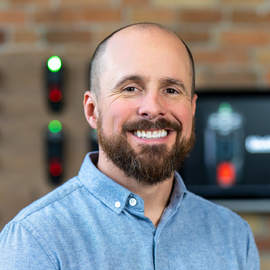
Phil Benson is Blackline Safety’s Vice President of Product, overseeing product management, industrial design, UX design, data engineering, business intelligence, and AI/ML services. With a background in designing industry-leading safety products at BW Technologies by Honeywell and interactive learning solutions at SMART Technologies, Phil brings deep expertise in developing user-centric, high-impact solutions.
At Blackline, he leads the development of a cohesive product portfolio, ensuring that every solution enhances customer confidence, usability, and brand loyalty. His team is committed to pushing the boundaries of connected safety technology, delivering innovative and data-driven solutions that protect workers in the most challenging environments.
Unquestionable safety
Never rely on historical data to know if your fleet is compliant and that your teams’ safety is accounted for. All alert and situational data stream directly from your devices to Blackline Live in real time where it fuels professional emergency responses and intelligent efficiency studies. Access full visibility of your fleet from anywhere and trust that your teams are always covered.
Intelligent analytics
Blackline Analytics Essentials deliver a complete view of your fleet's operations. Easily identify how equipment is being used, where hazards are being encountered and even determine which devices are performing well and which can be leveraged better.
Every bump test, calibration, gas exposure and usage session is automatically recorded for hassle-free reporting. By leveraging out-of-the-box integrated connectivity and automated device log collection, your devices build a body of data today, providing measurable performance for tomorrow.
And that’s not where it ends. When you’re ready, premium analytics, powered by Blackline Vision , help you reveal efficiency opportunities on your worksite, proactively find gas leaks and more.
Ready when you are
Quickly assign shared devices between workers. Using a barcode scanner, on-the-fly device assignments are easy, changing from one user in a few seconds, making shift-changes a seamless operation.
Help is always on the line
Rest easy knowing the safety of your teams in the field is covered. Blackline’s Safety Operations Center (SOC) is the critical link between your employees and the help they need during an emergency, health event, dangerous situation and more.
With Blackline's optional 24/7 Live Monitoring service, 99% of calls for help are answered in under 60 seconds. From receipt through to resolution, responses are executed according to your custom emergency response protocol. The SOC team is even Five-Diamond Certified , meaning they are empowered to escalate responses to dispatch local emergency services to the employee’s exact location.
Always ahead of the curve
Blackline futureproofs your connected safety system, protecting your investment. Your G7 device is completely customizable and can be configured to accommodate diverse gas detection and safety monitoring needs, including no-gas lone worker, single-gas, multi-gas and multi-gas pump options. G7 can start life as a connected single-gas detector and be updated over time to support multiple gas sensors, walkie-talkie functionality and advanced lone worker monitoring. And because each unit connects directly to the Blackline Live, there’s no limit on the number of devices in your network.
Additional Resources

Battling “Big Brother”: Building Worker Trust with Wearable Tech
Discover strategies to build worker trust with wearable tech in safety programs. Learn from industry experts about effective implementation and overcoming privacy concerns.
Tackling "Big Brother" Monitoring Concerns
See how Blackline Safety can help you find the right balance between safety and privacy, so your workers confidently use technology to keep them safe.
Marmon/Keystone Uses Personal Monitoring Devices to Protect Workers and Save Lives
Learn how Marmon/Keystone's investment in connected safety tech proved invaluable when an employee working alone suffered a health incident.
A Guide To Lone Worker Safety
Protect your Workers with an effective safety program. Read this comprehensive playbook to build a robust lone worker safety program, including five essential elements to include.